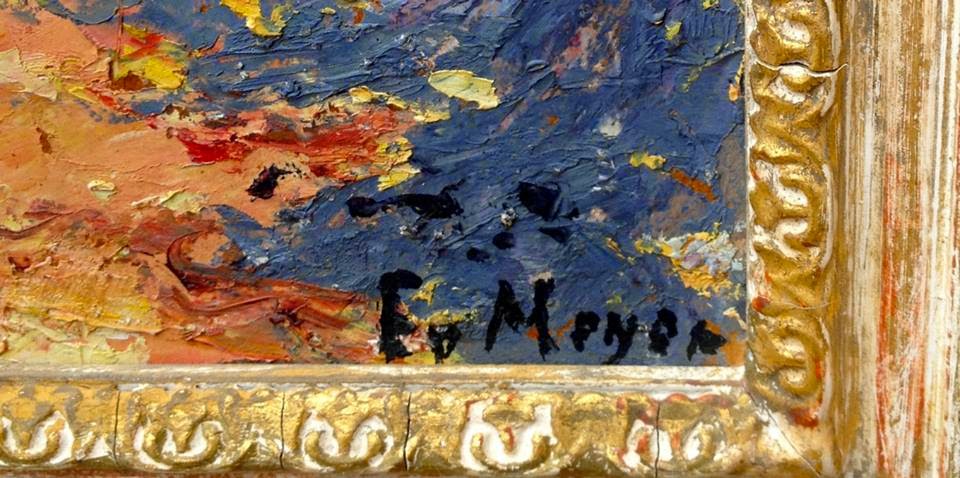
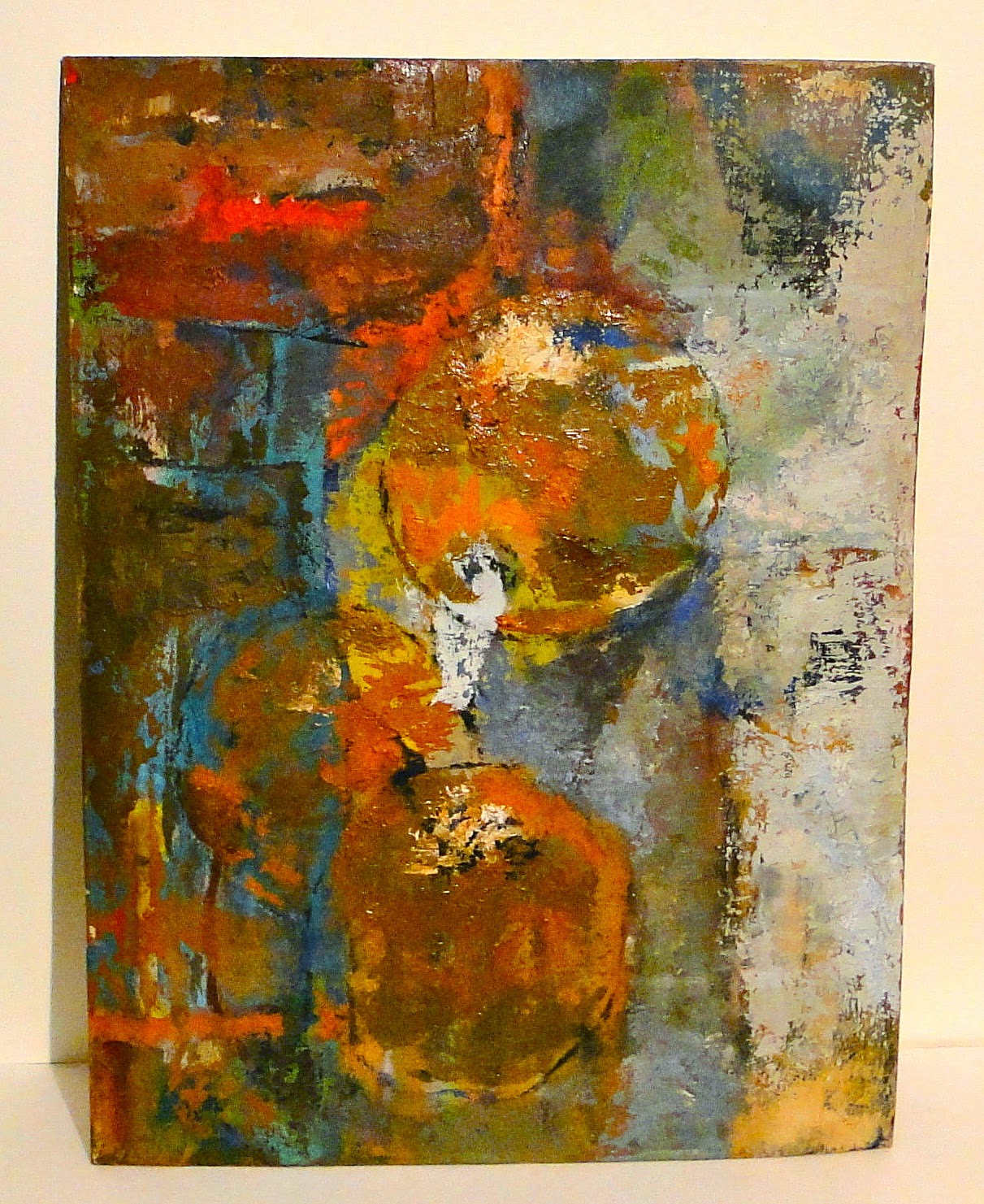
This is a very affordable but painterly impressionist painting probably from western Pennsylvania or eastern Ohio c. 1930's. It is 24" x 30", signed verso Joseph Leukhard and is available for purchase here


 Oscar Peterson at the Stratford Shakespearean Festival is widely regarded as the landmark album in Peterson's career, and one of the most influential trios in jazz.[citation needed] Their last recording, On the Town with the Oscar Peterson Trio,
recorded live at the Town Tavern in Toronto, captured a remarkable
degree of emotional as well as musical understanding between three
players.[14]
All three musicians were equal contributors involved in a highly
sophisticated improvisational interplay. When Ellis left the group in
1958, Peterson and Brown believed they could not adequately replace
Ellis. Ellis was replaced by drummer Ed Thigpen in 1959. Brown and Thigpen worked with Peterson on his albums Night Train and Canadiana Suite. Brown and Thigpen left in 1965 and were replaced by bassist Sam Jones and drummer Louis Hayes (and later, drummer Bobby Durham). The trio performed together until 1970. In 1969 Peterson recorded Motions and Emotions, featuring orchestral arrangements of pop songs such as The Beatles' "Yesterday" and "Eleanor Rigby". In the fall of 1970, Peterson's trio released the album Tristeza on Piano. Jones and Durham left in 1970.
Oscar Peterson at the Stratford Shakespearean Festival is widely regarded as the landmark album in Peterson's career, and one of the most influential trios in jazz.[citation needed] Their last recording, On the Town with the Oscar Peterson Trio,
recorded live at the Town Tavern in Toronto, captured a remarkable
degree of emotional as well as musical understanding between three
players.[14]
All three musicians were equal contributors involved in a highly
sophisticated improvisational interplay. When Ellis left the group in
1958, Peterson and Brown believed they could not adequately replace
Ellis. Ellis was replaced by drummer Ed Thigpen in 1959. Brown and Thigpen worked with Peterson on his albums Night Train and Canadiana Suite. Brown and Thigpen left in 1965 and were replaced by bassist Sam Jones and drummer Louis Hayes (and later, drummer Bobby Durham). The trio performed together until 1970. In 1969 Peterson recorded Motions and Emotions, featuring orchestral arrangements of pop songs such as The Beatles' "Yesterday" and "Eleanor Rigby". In the fall of 1970, Peterson's trio released the album Tristeza on Piano. Jones and Durham left in 1970. In the 1970s Peterson formed another trio with guitarist Pass and Niels-Henning Ørsted Pedersen
on bass. This trio emulated the success of the 1950s trio with Brown
and Ellis, gave acclaimed performances at numerous festivals, and made
best-selling recordings, most notably The Trio, which won the
1974 Grammy for Best Jazz Performance by a Group, and the 1978 double
album recorded live in Paris. In 1974 Oscar added British drummer Martin
Drew, and this quartet toured and recorded extensively worldwide. Pass
said in a 1976 interview: "The only guys I've heard who come close to
total mastery of their instruments are Art Tatum and Peterson."
In the 1970s Peterson formed another trio with guitarist Pass and Niels-Henning Ørsted Pedersen
on bass. This trio emulated the success of the 1950s trio with Brown
and Ellis, gave acclaimed performances at numerous festivals, and made
best-selling recordings, most notably The Trio, which won the
1974 Grammy for Best Jazz Performance by a Group, and the 1978 double
album recorded live in Paris. In 1974 Oscar added British drummer Martin
Drew, and this quartet toured and recorded extensively worldwide. Pass
said in a 1976 interview: "The only guys I've heard who come close to
total mastery of their instruments are Art Tatum and Peterson."


%2Bc1914-17.jpg) Synchromism was developed by Stanton MacDonald-Wright and Morgan
Russell while they were studying in Paris during the early 1910s.[6] From 1911 to 1913, they studied under the Canadian painter Percyval Tudor-Hart, whose color theory connected qualities of color to qualities of music, such as tone to hue and intensity to saturation.[7] Also influential upon MacDonald-Wright and Russell were the paintings of the Impressionists, Cézanne, and Matisse, which heavily emphasized color over drawing.[8] Russell coined the term "Synchromism" in 1912, in an express attempt to convey the linkage of painting and music.
Synchromism was developed by Stanton MacDonald-Wright and Morgan
Russell while they were studying in Paris during the early 1910s.[6] From 1911 to 1913, they studied under the Canadian painter Percyval Tudor-Hart, whose color theory connected qualities of color to qualities of music, such as tone to hue and intensity to saturation.[7] Also influential upon MacDonald-Wright and Russell were the paintings of the Impressionists, Cézanne, and Matisse, which heavily emphasized color over drawing.[8] Russell coined the term "Synchromism" in 1912, in an express attempt to convey the linkage of painting and music. The first Synchromist painting, Russell's Synchromy in Green, exhibited at the Paris Salon des Indépendants in 1913. Later that year, the first Synchromist exhibition by Macdonald-Wright and Russell was shown in Munich.[9]
Exhibitions followed in Paris in October 1913 and in New York in March
1914. Macdonald-Wright moved back to the United States in 1914, but he
and Russell continued separately to paint abstract synchromies.[10] Synchromism remained influential among artists well into the 1920s, though its purely abstract period was relatively brief.[11]
Many synchromies of the late 1910s and 1920s contain representational
elements. At no time, though, did Macdonald-Wright or Russell achieve
the level of critical or commercial success they had hoped for when they
introduced Synchromism to the United States. It was not until after
Russell's death and late in Macdonald-Wright's life that extensive
museum and scholarly attention was paid to their highly original
achievements. Other American painters who experimented with Synchromism
include Thomas Hart Benton, Andrew Dasburg, Patrick Henry Bruce, and Albert Henry Krehbiel.[12]
The first Synchromist painting, Russell's Synchromy in Green, exhibited at the Paris Salon des Indépendants in 1913. Later that year, the first Synchromist exhibition by Macdonald-Wright and Russell was shown in Munich.[9]
Exhibitions followed in Paris in October 1913 and in New York in March
1914. Macdonald-Wright moved back to the United States in 1914, but he
and Russell continued separately to paint abstract synchromies.[10] Synchromism remained influential among artists well into the 1920s, though its purely abstract period was relatively brief.[11]
Many synchromies of the late 1910s and 1920s contain representational
elements. At no time, though, did Macdonald-Wright or Russell achieve
the level of critical or commercial success they had hoped for when they
introduced Synchromism to the United States. It was not until after
Russell's death and late in Macdonald-Wright's life that extensive
museum and scholarly attention was paid to their highly original
achievements. Other American painters who experimented with Synchromism
include Thomas Hart Benton, Andrew Dasburg, Patrick Henry Bruce, and Albert Henry Krehbiel.[12]  The earliest extended discussion of Synchromism appeared in the book Modern Painting: Its Tendency and Meaning
(1915) by Willard Huntington Wright. Wright was a literary editor and
art critic and the brother of Stanton Macdonald-Wright, and the book was
secretly co-authored by Stanton. It surveyed the major modern art
movements from Manet to Cubism, praised the work of Cézanne (at the time
relatively unknown in the United States), denigrated "lesser Moderns"
such as Kandinsky and the Futurists (and, of course, the Orphists), and
predicted a coming age in which color abstraction would supplant
representational art. Synchromism is presented in the book as the
culminating point in the evolution of modernism. Willard Huntington
Wright never acknowledged that he was writing about his own brother's
work.[13]
The earliest extended discussion of Synchromism appeared in the book Modern Painting: Its Tendency and Meaning
(1915) by Willard Huntington Wright. Wright was a literary editor and
art critic and the brother of Stanton Macdonald-Wright, and the book was
secretly co-authored by Stanton. It surveyed the major modern art
movements from Manet to Cubism, praised the work of Cézanne (at the time
relatively unknown in the United States), denigrated "lesser Moderns"
such as Kandinsky and the Futurists (and, of course, the Orphists), and
predicted a coming age in which color abstraction would supplant
representational art. Synchromism is presented in the book as the
culminating point in the evolution of modernism. Willard Huntington
Wright never acknowledged that he was writing about his own brother's
work.[13]
 Three other extended treatments of Synchromism can be found in the
catalogue by Gail Levin that accompanied a major traveling exhibition
organized the Whitney Museum of American Art in 1978, Synchromism and American Color Abstraction, 1910-1925, in Marilyn Kushner's catalogue for a 1990 Morgan Russell retrospective at the Montclair Museum, and in Color, Myth, and Music: Stanton Macdonald-Wright and Synchromism
by Will South, a catalogue-biography published in conjunction with a
three-museum exhibition of the artist's work in 2001. Levin and South
are the two art historians most responsible for
Three other extended treatments of Synchromism can be found in the
catalogue by Gail Levin that accompanied a major traveling exhibition
organized the Whitney Museum of American Art in 1978, Synchromism and American Color Abstraction, 1910-1925, in Marilyn Kushner's catalogue for a 1990 Morgan Russell retrospective at the Montclair Museum, and in Color, Myth, and Music: Stanton Macdonald-Wright and Synchromism
by Will South, a catalogue-biography published in conjunction with a
three-museum exhibition of the artist's work in 2001. Levin and South
are the two art historians most responsible for  Synchromism is based on the idea that color and sound are similar phenomena and that the colors in a painting can be orchestrated in the same harmonious way that a composer arranges notes in a symphony.[2] Macdonald-Wright and Russell believed that, by painting in color scales, their visual work could evoke the same complex sensations as music. As Macdonald-Wright said,"Synchromism simply means 'with color' as symphony means 'with sound.'"[3] The phenomenon of "hearing" a color or the pairing of two or more senses--synesthesia—was also central to the work of Wassily Kandinsky, who was developing his own synesthetic paintings, or "compositions," in Europe at approximately the same time.
 The earliest Synchromist works were similar to Fauvist paintings. The multi-colored shapes of Synchromist paintings also loosely resembled those found in the Orphism of Robert and Sonia Delaunay.[4]
MacDonald-Wright insisted, however, that Synchromism was a unique art
form and "has nothing to do with Orphism and anybody who has read the
first catalogue of Synchromism ... would realize that we poked fun at
Orphism." The Synchromists' debts to Orphism remain a source of debate
among art historians. Their approach more clearly owed something to
Cubism. The Synchromists made use of the broken planes of the Cubists,
but their lavishly colored areas of paint sometimes looked, as the art
historian Abraham Davidson has described them, like "eddies of mist, the
droplets of which collect to form parts of a straining torso....To find
anything like this in American painting one has to wait for the
color-field canvases of Jules Olitski in the 1960s. All images courtesy Wiki Images
The earliest Synchromist works were similar to Fauvist paintings. The multi-colored shapes of Synchromist paintings also loosely resembled those found in the Orphism of Robert and Sonia Delaunay.[4]
MacDonald-Wright insisted, however, that Synchromism was a unique art
form and "has nothing to do with Orphism and anybody who has read the
first catalogue of Synchromism ... would realize that we poked fun at
Orphism." The Synchromists' debts to Orphism remain a source of debate
among art historians. Their approach more clearly owed something to
Cubism. The Synchromists made use of the broken planes of the Cubists,
but their lavishly colored areas of paint sometimes looked, as the art
historian Abraham Davidson has described them, like "eddies of mist, the
droplets of which collect to form parts of a straining torso....To find
anything like this in American painting one has to wait for the
color-field canvases of Jules Olitski in the 1960s. All images courtesy Wiki Images