'/>

Hazel Home Art and Antiques Wausau, Wisconsin

Hazel Home Art and Antiques Wausau, Wisconsin
Showing posts with label photography. Show all posts

Thursday, June 11, 2015

Family snapshots of great artists featured in Artists Unframed: Snapshots from the Smithsonian's Archives of American Art by Merry A. Foresta


“I have always loved snapshots,” says curator Merry Foresta, who over the last few years, has poured over thousands of private family photographs belonging to the greatest artists of the last century, beginning with the introduction of the Kodak Brownie in the early 1900s. For Artists Unframed: Snapshots from the Archives of American Art, Foresta has pulled together more than one hundred of these behind-the-scenes moments of artistic giants and their families, revealing the spontaneous and everyday occasions that underpinned the intimate lives of everyone from Jackson Pollack and Andy Warhol to Frida Kahlo and Georgia O’Keeffe.
Since 1954, the Archives of American Art, where Foresta would ultimately serve as the director of the Smithsonian Photography Initiative, has gathered over twenty million objects and excepts from the collections of American masters. When she embarked on this project, she selected frames that could only be classified as “snapshots.” As a child and into adulthood, Foresta remembers reaching to a high shelf to recover a box of her old family portraits, listening intently as the backstories were recounted and the scene spun to life. A snapshot, she suggests, evokes both a sense of familiarity and mystery, disclosing biographical information about its subject while inciting a slew of unanswered questions.
The photos Foresta selected range from those captured at historic gallery openings to those taken as after-thoughts to family vacations. While she was of course captivated by the prolific and unforgettable names, she was also drawn to those artists who were more obscure; in the end, the potency of the image relied on the moment they captured. Her favorites are the ones she describes as “slightly goofy:” the shots of Andy Warhol galavanting with his buddies at Fire Island, or Ansel Adams mugging for the camera, posing like a movie star. One surprise, she admits, has been the overwhelming quantity of photographs chronicling the life of Jackson Pollack, whose family seemed obsessed with recording even the most hushed and routine interactions.
In unveiling these images, which range from candid to informally staged, Foresta hopes to humanize both the individuals pictured and the more vague and elusive figure of “the artist.” In the end, these people—most of them lost to us—are far more complex than we imagine them, and often, the realities of their lives don’t fit within the confines of the history books. While many of the Artists Unframed photographs provide invaluable insight into the inspirations and ambitions of their subjects, their beauty lies in the fact that they evade any fixed conclusions. Yes, they bring us nearer to the innermost experience of these artists, and yet they remain slippery and elusive, inviting us to revisit them time and again.
Artists Unframed: Snapshots from the Archives of American Art by Merry A. Foresta is published by Princeton Architectural Press, 2015.

 Pablo Picasso and his daughter Maya, ca. 1944. William and Ethel Baziotes papers.

 Diego Rivera and Frida Kahlo, Coyoacán, Mexico. Photograph by Chester Dale (1883–1962), Chester Dale papers.

 Jackson Pollock on the beach with a dog, ca. 1945. Jackson Pollock and Lee Krasner papers.

Wednesday, June 3, 2015

Wilhelm Heckel (1918-1970) Magic of the Past. Czech industrial and commercial photographer.

"William Heckel (1918-1970), a legendary climber and one of the most important Czech photographers of the twentieth century. He belonged to the former peak especially in climbing, landscaping, but also promotional photos. William Heckel with advertising photography began paying late thirties, when he earned as a publicity photographer in the studio, "Illek and Paul" .In 1941, he became an industrial photographer full time. First of Zbrojovka Brno, and later, for example, the Czechoslovak Chamber of Commerce. Specific areas are also images of races when photographed athletes at the world-famous when machines JAWA and CZ and which combined the news and promotional approach to work. William Heckel worked most of his life in an atmosphere of times when too much artistry and personality photographers profitable. Heckel was not clear exception and usually managed to find a new fresh look and composition and the dusty factory floor. Pictures of Skoda cars contemporary radios, cameras, refrigerators and vacuum cleaners as well as their users are happy, thanks Heckelově distinctive aesthetics retrospect incredible charm of times long past". All fotos and text courtesy of fotografic.cz


Friday, May 8, 2015

The Digital Archive from the collections of The New York Public Library.

One of the most interesting sites I have found lately is the complete digital archives of The New York Public Library. Ever-expanding, the collection now includes 829,936 historical images available for viewing and downloading. Here are just a few of the hundreds of themes available.

1. Classic Illustrated Zoologies and Related Works 1550-1900 (7900 items)

Pipilo leucopis. White-eyed Towhee. Adult, male. [Shrub, Dwarf Oak.]


2.  The Denishawn Collection of Dance Photographs (941 items)


Ruth St. Denis in first costume inspired by Egyptian Deities cigarette poster.


3. Engineering Playing Cards (52 items)

 Two of clubs.


4. Bookbinding bequeathed by William
Augustus Spencer (704 items)

Front Doublure


5. Pictures of science: 700 years of 
science and medical illustrations (299 items)

 Total eclipse of the sun. Observed July 29, 1878, at Creston, Wyoming Territory.


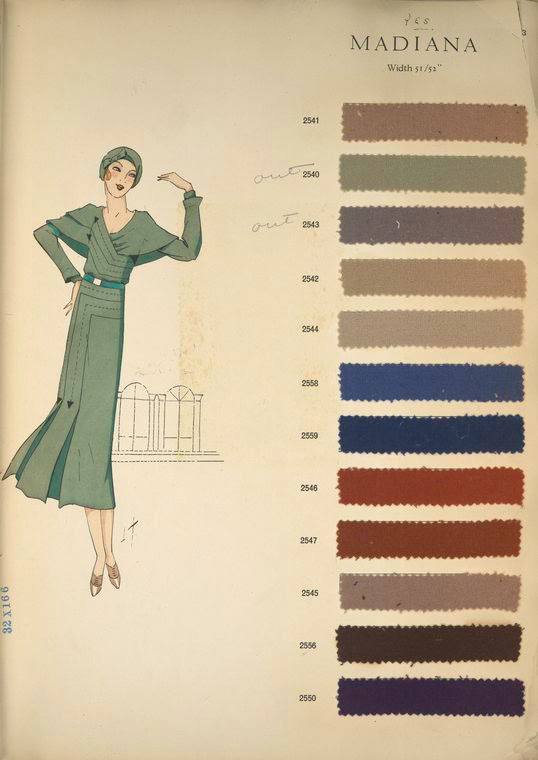
6. Dress and fashion: design and manufacture
(566 items)

 Madiana.


7. Russian book jackets 1917-1942 
(656 items)

 Sel'vinskii, Il’ia L’vovich. Pushtorg. [Fur-Trade.] Moscow: Khudozhestvennaia Literatura, 1931.


8. Farm Security Administration photographs
(1094 items)

 At the "girlie" show at the fair in Rutland, Vermont.


9. Maps from the Lawrence H. Slaughter Collection
(3710 items)

 Orbis terrae compendiosa descriptio : quam ex magna universali Gerardi Mercatoris Domino Richardo Gartho, geographie ac ceterarum bonarum artium amatori ac fautori summo, in veteris amicitie ac familiaritatis memoriam Rumoldus Mercator fieri curabat A0. M.D. LXXXVII.


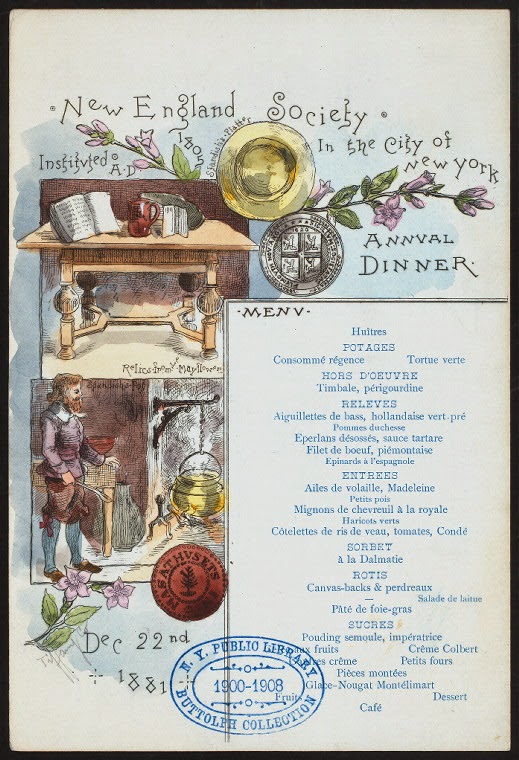
10. Buttolph collection of menus. (18,964 items)

 ANNUAL DINNER [held by] NEW ENGLAND SOCIETY IN THE CITY OF NEW YORK.


If you love photograpy, cartography, the theater, early pop culture, postcards, books, history, Americana, New York City, opera, astronomy, biology, botany and literally thousands of other topics this is a great page to enjoy and to do research on your collection of ephemera. You may never sleep again. Amazing. The Digital Collection of the archives of the New York Public Library is available here, and it is free.

Wednesday, February 4, 2015

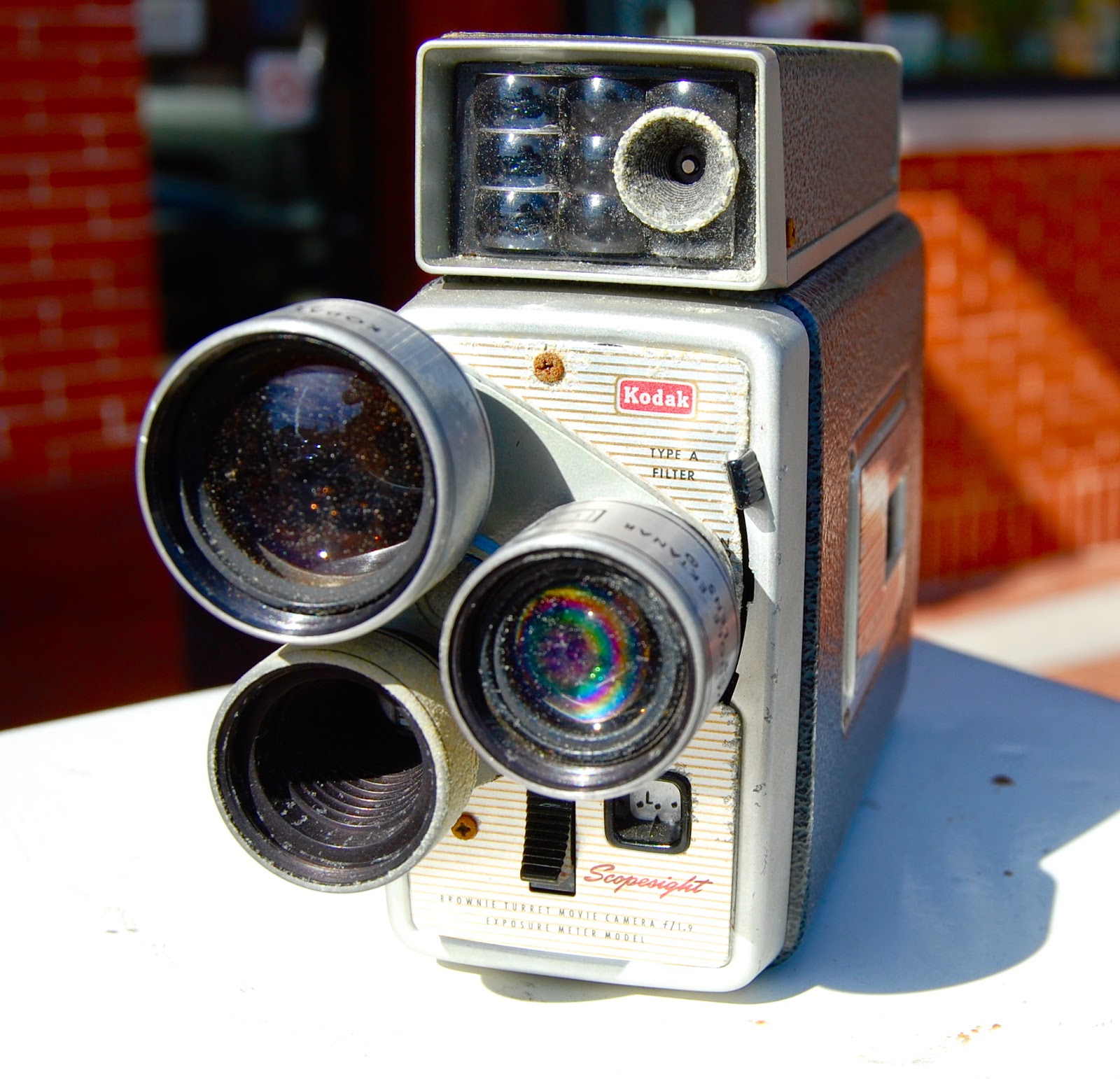
Vintage 8mm and Super 8 cameras and projectors. Hot, hot, hot.....

It is refreshing to see young people that are interested in film making using the old school formats. We usually sell every old 8 or Super 8 camera and projector we get pretty quick. There are tons of websites and video tutorials that will tell you how to get started if you are interested in making your own film.

Regular 8mm: The standard 8 mm (also known as regular 8) film format was developed by the Eastman Kodak company during the Great Depression and released to the market in 1932 to create a home movie format that was less expensive than 16 mm. Wiki  Kodak ceased sales of standard 8 mm film under its own brand in the early 1990s, but continued to manufacture the film, which was sold via independent film stores. Wiki 

Super 8: In 1965, Super-8 film was released and was quickly adopted by the amateur film-maker. It featured a better quality image, and was easier to use mainly due to a cartridge-loading system that did not require re-loading—and re-threading halfway through. Wiki

Here is a great place to visit for all things 8mm. Over 2000 articles about 8mm and Super 8 cameras, projectors, film and film making can be found here

Here are a few of the cameras we have or have had in inventory:

 https://www.etsy.com/listing/206865060/kodak-brownie-super-8-movie-camera-rare?ref=shop_home_active_12&ga_search_query=movie
Available for purchase here
 This is a splicer, you will need one of these for your movie.